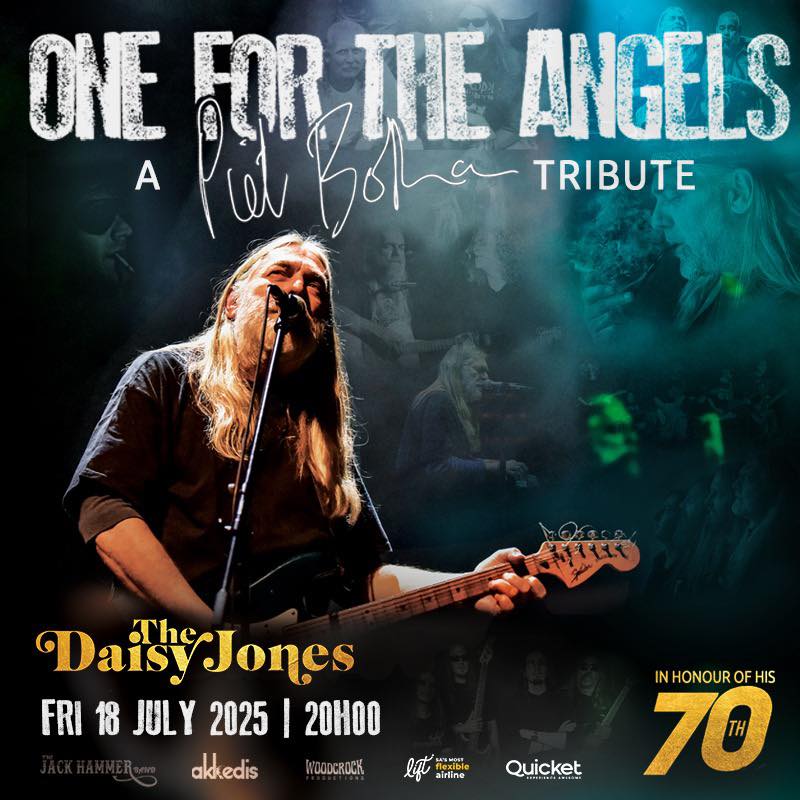
On 18 July 2025, rock legend Piet Botha would have turned 70. And if he were still with us, chances are he’d have celebrated it the only way he knew how—on stage, guitar in hand, surrounded by those who shared his journey.
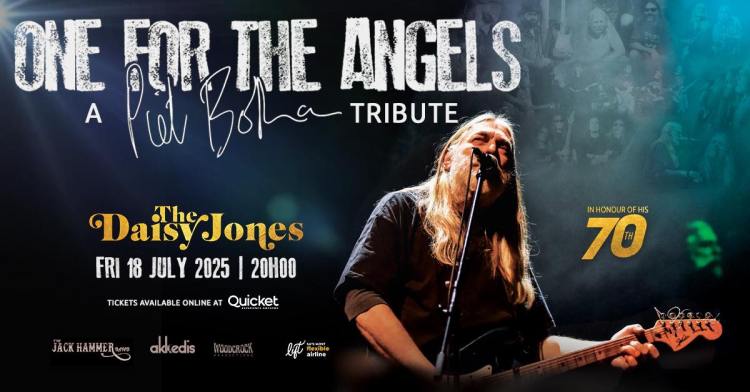
While Piet’s Strat may now be silent, his spirit continues to resonate through the music, the memories, and the people he inspired. To honour his legacy, we’re gathering for a special night at The Daisy Jones Bar, just outside Stellenbosch, for One for the Angels: A Piet Botha Tribute.
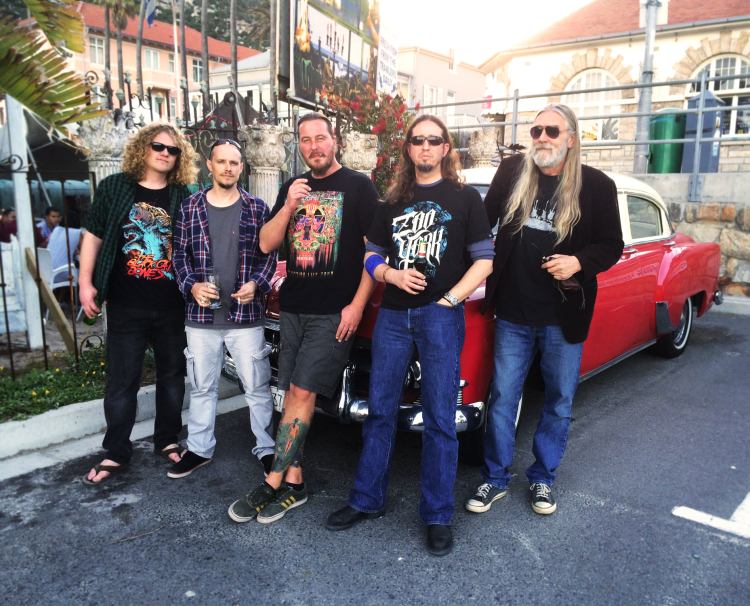
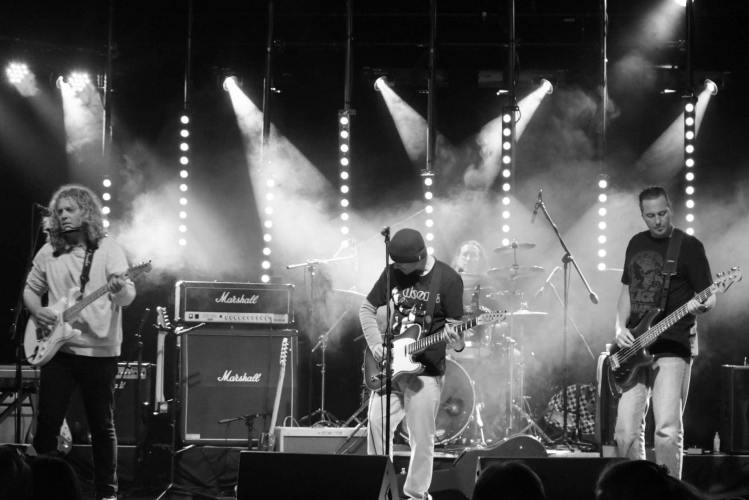
Featuring the full Jack Hammer Band lineup—Johnathan Martin, Jake Gunn, Anthonie van der Walt, Paul van der Waal, and Tertius du Plessis—alongside Piet’s Lyzyrd Kyngs brothers, Akkedis, and a few very special guests, this is more than just a tribute. It’s a celebration of a life that burned bright and left a permanent mark on South African rock ‘n roll.
The night takes its name from One for the Angels, a track on Jack Hammer’s most recent album. Written by Piet’s brother-in-law Raymond Smith, it was inspired by a song Piet composed during a late-night jam the two shared over a bottle of whiskey—only to forget it by morning. Piet, ever the poet, laughed it off and said it was “one for the angels.”
Join us as we raise a glass and celebrate what would have been a milestone birthday for one of South Africa’s most beloved rockers.
Tickets are limited.
This is a seated show inside.
Table bookings: +27 64 968 2015. Please note it is table sharing of 4-6 pax.
Don’t miss this one-of-a-kind tribute.
Thank you to our travel partner Lift Airlines for always taking care of our musos and their gear. #upliftsa
While updating the Various Artists Compilations page on the Piet Botha website, I discovered that several of my favourite collections weren’t available on Spotify. To relive these nostalgic sounds, I’ve recreated a few of them as playlists. I hope you enjoy this musical journey down memory lane.
~ Brian Currin
A bit of fun led me to create this playlist, the title inspired by Obi-Wan Kenobi. While on the hunt for South African artists like Jack Hammer, Rabbitt, Clout, and others, I stumbled upon these unrelated musicians.
This was when I first met Piet Botha and Johnathan Martin (that is the correct spelling for Johnathan, I found out years later!). Piet often used to say that I put them on the internet before they even knew what the internet was!
Piet Botha’s famed blues-rock band is releasing a retrospective of their 4 albums on a new compilation CD early in December. Titled simply Anthology this CD will include 4 or 5 new songs plus a new re-recording of the classic ‘Fort Lauderdale’ alongside tracks from all 4 previous albums.
Those of you who were lucky enough to see Piet Botha on his recent Skopgraaf tour would have heard a couple of the new tracks, including ‘April’.
Piet Botha, Jonathan Martin and Tertius du Plessis wowed the enthusiastic audience at the Whammy Bar in Cape Town recently. Their set included Piet Botha solo songs, Jack Hammer tracks and some covers including a stunning version of Zeppelin’s ‘Tangerine’ and Bob Dylan’s ‘All Along The Watchtower’.
The Digest caught Piet Botha and Jonathan Martin’s unplugged set at two different venues in Cape Town recently. First at the Big Tree in the Strand on the 12th February and again on the 17th February at the Whammy Bar in Table View.
These 2 musicians are incredibly talented and they entertained the enthusiastic crowds with songs from all 4 previous Jack Hammer albums, as well as Piet’s 2 solo Afrikaans outings.
They also played a few covers which included Nick Drake’s ‘Northern Sky’, Soul Asylum’s ‘Runaway Train’, Bob Dylan’s ‘All Along The Watchtower’, Led Zeppelin’s ‘Tangerine’, Pink Floyd’s ‘Wish You Were Here’, Guns ‘N Roses’ ‘Sweet Child ‘O Mine’ and Robert Johnson’s ‘Crossroads’.
Two brilliant evenings of Acoustic Afrikaans Alternative Folk Rock (pick one or all of the above) which will never be forgotten…
And please don’t cry / This is not how the story ends / It ends on a highway to the sun
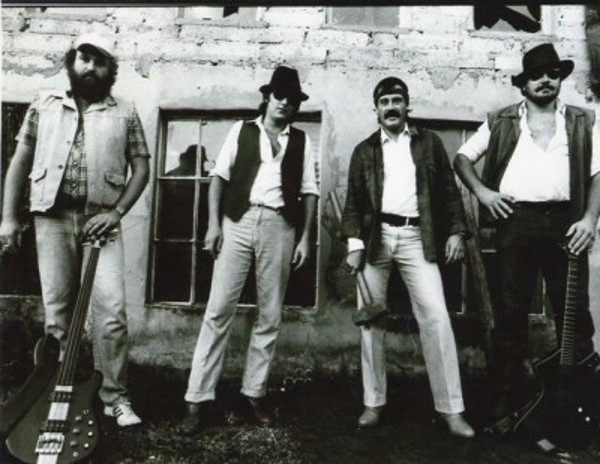
Jack Hammer November 1984 (L-to-R): Eric Birkenstock, Piet Botha, Jan Maloney, Boet Faber. First rehearsals at Slowfarm
November 2024 marks a significant milestone in the history of South African rock music, as it commemorates the 40th anniversary of the legendary band Jack Hammer. Formed in 1984, Jack Hammer quickly established themselves as a force to be reckoned with, captivating audiences with their raw energy, powerful performances, and their own unique blend of rock and blues.
At the helm of Jack Hammer was the charismatic and talented frontman, Piet Botha. Botha’s powerful vocals, dynamic stage presence, and exceptional songwriting skills propelled the band to new heights. His untimely passing in June 2019 left a void in the South African music scene, but his legacy lives on through his music and the enduring impact of Jack Hammer.
Piet Botha
As we reflect on the 40th anniversary of Jack Hammer, we pay tribute to Piet Botha and the band’s contribution to South African rock music. Their music continues to inspire and resonate with fans, ensuring that their legacy will endure for generations to come.
Jack Hammer January 2017 (L-to-R): Jake Gunn, Johnathan Martin, Tertius Du Plessis, Paul van de Waal, Piet BothaJack Hammer Band 2022 (L-to-R): Jake Gunn, Johnathan Martin, Paul van de Waal (at the back), Tertius Du Plessis | Photo: Jessica Botha
In 1985 Piet Botha headed over to Los Angeles — or as Piet liked to call it: ‘Yuppie Land’ — hoping to try and get a break into the American music vibe.
Whilst there, by some stroke of luck he managed to cross paths; living in the same block of flats, with the young and upcoming actor Billy Bob Thornton, who at the time was also a young aspiring singer and drummer. Piet worked construction during the week with Mexican & Paraguayan immigrants — or as Piet recalls it — your true ‘Working Class Heroes’.
Piet and Billy Bob ended up jamming together and after a while they found their way into a small recording studio somewhere in Burbank where over weekends they recorded some songs (*8 bit rate tracks, ‘nogals’). One of the songs, which was written and sung by Billy Bob titled ‘Gypsy Wind’ was released on the Jack Of All Trades album after Piet’s return home to South Africa due to a bomb threat in LA at the time. ‘Gypsy Wind’ was also released on the Jack Hammer Anthology album in 1999.
Thanks to Carina Laubscher for the phrase “blowtorch poetry” which she coined in her review of the CD launch for ‘Die Mamba‘.
Piet Botha, a good friend of mine, possessed a poetic prowess that could sear into the very depths of your soul. His words, akin to a scorching blowtorch, had the ability to strip away layers, leaving you vulnerable and exposed, yet remarkably enriched by the experience.
Piet Botha
My profound gratitude for being fluent in Afrikaans stems from the fact that some of Piet’s most poignant and incisive works were expressed in this language. Afrikaans songs from the 1960s and 1970s were radio-friendly and saccharin-sweet with titles and sentiments like “Ek Verlang Na Jou1” and “Daar’s Niks Soos Ware Liefde2“.
And for years, I had been immersed in songs glorifying “New York, New York,” “Nashville Tennessee,” “California Girls,” “Route 66” and the quintessential American imagery prevalent in rock music. Then came the Alternative Afrikaans pioneers like Anton Goosen, David Kramer, Valiant Swart, Koos Kombuis, and, of course, Piet, who narrated stories that resonated with my own experiences.
Piet delved into unvarnished realities, with no sugar-coating, depicting experiences like compulsory military service, visits to Jeffrey’s Bay and Vredenburg, and road trips along the N1, punctuated by stops in Beaufort-West and Kimberley. His words were often unapologetically harsh and uncompromising, exemplified by pieces like “Welcome To Azania“, “The Game” and “Jozi Town“. Yet, amid the savagery of his blowtorch, Piet possessed the unique ability to soothe wounds with a gentle balm of humour and self-deprecation.
“En jy wonder waar is die ou siel nou / Hy sit in die son met sy kitaar3“.
Poignant words that encapsulates the paradox of Piet’s artistry, where profound introspection meets a soothing musical embrace. His wicked sense of humour, subtly woven into songs like “Man Met Kitaar,4” “Blues Vir Louise5” and “Die Heks Is Dood6” added a delightful layer to his masterful songwriting.
Notably, Piet refrained from explicit language in his music, except for a powerful exception in “Goeienag Generaal.7“
“Toe ek weer kyk, het ‘n AK8 jou fucked-up geskiet”.9
This departure from his standard style emphasized the gravity of expressing the sentiments of a generation whose youth was stolen by the formidable Apartheid government.
Piet was a pioneer, one of the first musicians to articulate the collective emotions of a generation. His song “Goeienag Generaal” became a lifeline, a beacon of understanding for those who had felt the weight of history on their shoulders. The sarcastic sign-off, “Goeienag Generaal, slaap lekker10,” serves as the culmination of a blowtorch set to maximum intensity.
Piet’s musical narratives were populated with gypsies and ghosts, exploring Blues clichés such as midnight trains, whisky, crossroads, rivers, and vagabonds. In Piet’s hands, these became vivid, personal tales that resonated as if experienced for the first time. He didn’t merely take you on a journey; he made you a fellow explorer.
In his storytelling, Piet names names11, but couched in aliases. Louise, Ruby, Kitty, Juanita, Diana and others appeared and sometimes reappeared in tales of searching, longing, and eventual loss of love. Yet, amid the tribulations, he found solace in the love of family and the brotherhood of the road.
Piet’s songs often centred around life on the road, capturing the essence of the hard-touring musician. I was fortunate to share some of these experiences with Piet and the brotherhood (and sisterhood, as Piet often included his daughters in his travels) during tours to the STRAB Festival in Mozambique.
Left-to-right: Jessica, Piet, Piya. Robynne in front.
A generous spirit, Piet treated people of all races and social standing with kindness. He collaborated eagerly with younger musicians, offering encouragement and willingly sharing the stage.
His generosity extended beyond his music, seen in gestures like generously tipping local petrol station and Wimpy staff along the way from Pretoria to Mozambique. I experienced this first hand and it profoundly and positively affected me.
Piet’s ability to paint word-pictures was unparalleled, effortlessly capturing vivid scenes with lines like “Target one, anything that moves13,” or the evocative “Daar was altyd ‘n bietjie reën in jou oë14” and “Kyk hoe dans hy, in die skemer, in die verte…15“. His influences, worn proudly on his sleeve, included musical legends like Neil Young, Leonard Cohen, Johnny Cash, Bob Dylan, Warren Zevon, Jim Morrison, Bruce Springsteen and Steve Earle.
Mr (Derek) Riley, (Jan) Maloney, (Paul) Vantoon, Saint Adrian (Attie Louw), Moonshine Lee and (Hendry) Jackson are just some of the real friends of Piet that get named in his songs. ↩︎
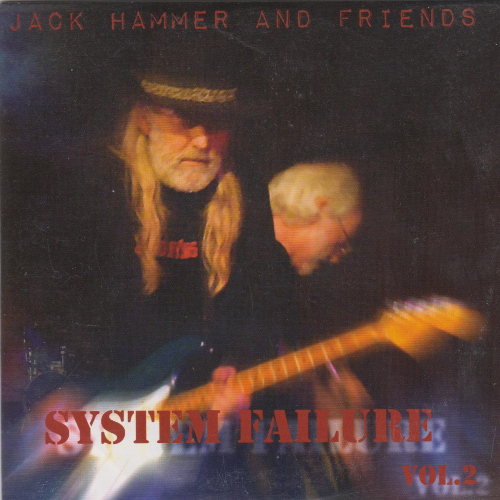
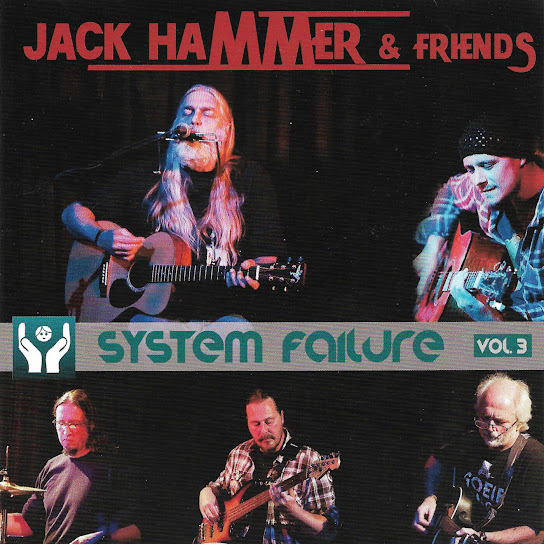
Also added information for the three System Failure compilation albums released by Jack Hammer & Friends. These compilations include the unique non-album tracks “Michael John Connor”, “Motherless Child” (with Loandi Boersma on vocals), “Still You Stay” and “Daddy’s Home”.
The clue to how this song may sound is in the first word of the title. It’s blues through and through, right from the very first rasping guitar note, via the racing drums and swirling organ and through to the whiskey-rasp vocals, it never lets up its blues-ey feel.
The song first appeared on Piet Botha’s 1999 album ‘Jan Skopgraaf’ and it races along at pace. On the live version that can be found on the ‘Bootleg’ and ‘Tassenberg All Stars’ albums, Piet introduces the track by saying ‘hier’s ‘n ode aan ’n heks wat ons geken het’ (here’s an ode to a witch that we knew’) and there does seem to be a kind of devilish energy to the track that brings to mind a mad dance around a fire in the dark woods.
And the lyrics throw up sparks from the fire that haunt and enchant. Piet sings about Louise and how she was ‘nooit ‘n maklike meisie’ (never an easy woman) and that wherever he goes, ‘Loop ek met my bybel/En ‘n nine mil/En ‘n mes’ (I walk with a bible, a 9 mil and a knife), because he is scared of Louise, ‘banger as n’ pofadder’ (more scared [of her] than of a pofadder). This woman is bad news. And that’s good news for a blues track. A bad woman makes for good blues.
There are at least 2 live versions of the track out there. The first is the aforementioned one on ‘Bootleg’ and ‘Tassenberg Allstars’ while there is also a Jack Hammer version on ‘Live At The Nile’. The former is an acoustic version with more muted vocals and seems to soften Louise a little while the latter starts out with a heavier guitar and then launches into a ZZ Top-fest of guitars and brings that down and dirty feel to a Louise who is a cactus of a woman. Not for the faint hearted.
Where to find it:
Jan Skopgraaf – Piet Botha, (1999), Wildebeest Records, WILD 019
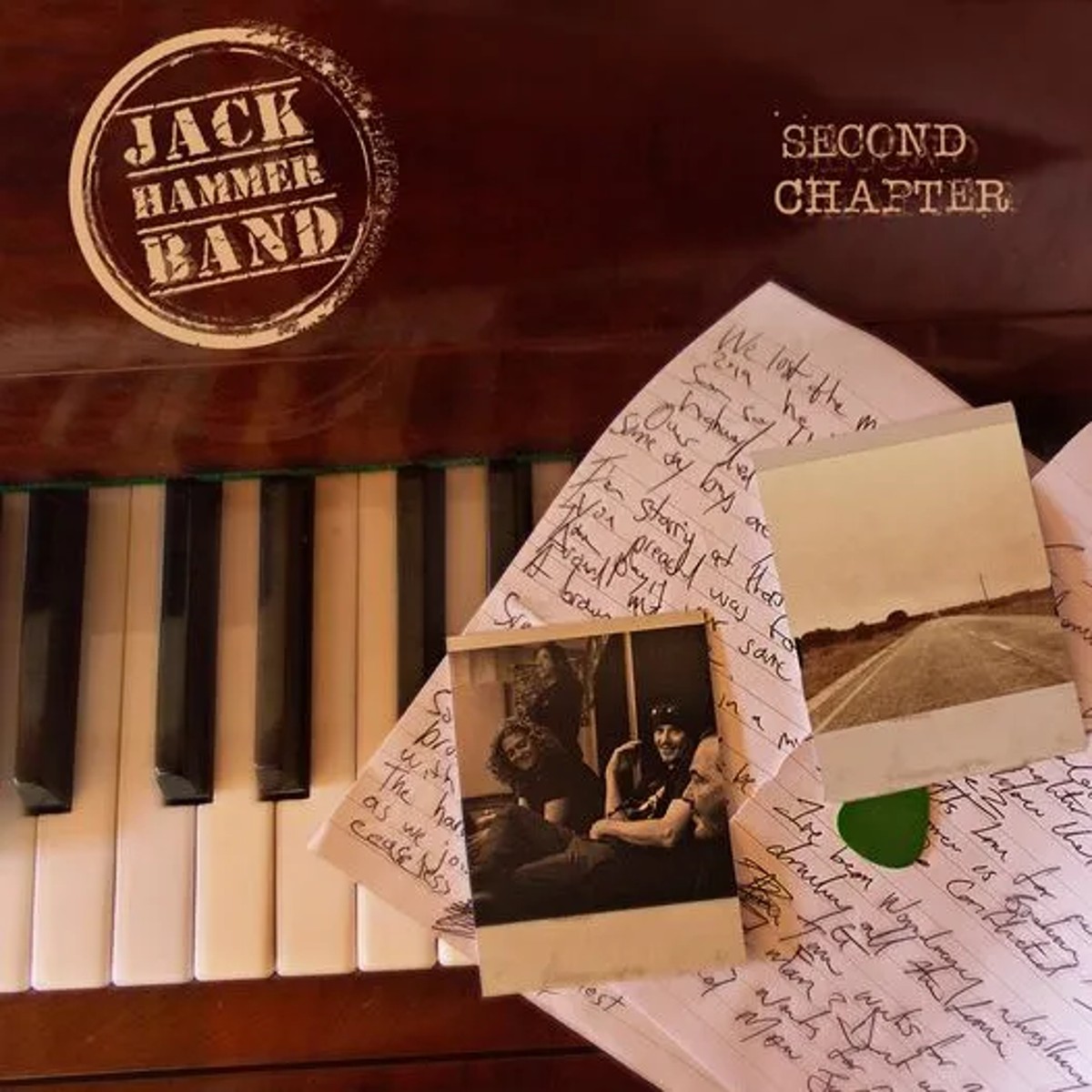
“Second Chapter” by the Jack Hammer Band does what it says: without any pretences, the album blasts straight into the driving rock sound that has come to define the longest-standing South African rock band.
You immediately find yourself at a Jack Hammer gig, with Duke steady behind the kit, Bean towering over his black bass like a watchkeeper, and Johno and Jake Gunn wringing rock ’n roll out of their guitars as if their lives depended on it.
There is also the tall presence of the man of myth and his Stratocaster that goes by the name of Green Mamba – it would be difficult to imagine Piet Botha laying down the guitar after departing.
The album, co-written by Johnathan Martin, member of Jack Hammer since 1996, and Jake Gunn, who joined the ranks in the 2010s, was initially set out as an impulse to craft ten songs out of the kinship shared between the two. It soon became what had been called for: an album for Piet. The album’s path was led by an eleventh track – a reworked, never-before recorded version of ‘Diana’, a song Piet Botha left behind.
Raymond Smith, Piet’s brother-in-law, urged the band to write and record as Jack Hammer again and helped to bring it all together. He also wrote ‘One for the Angels’, a song inspired by one late-night party with Piet Botha.
Through songs shared and learned on stage, the band are creating a living archive, not only by telling Piet and Jack Hammer’s musings and stories in musical form, but also by revisiting undocumented material and channelling an immense discography.
Come celebrate the official album launch of “Second Chapter” on 11 November at the JARR Bar & Restaurant, Pretoria’s home of sound.








 Piet Botha